
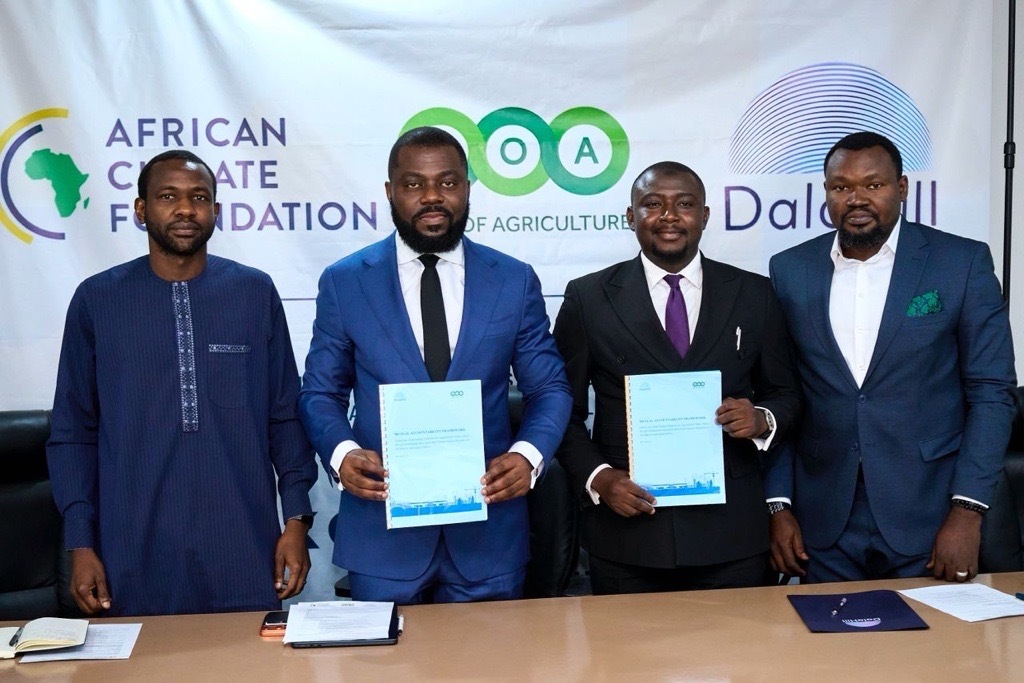
DalaHill, BOA sign $100,000 pact for climate-aligned agricultural finance
Legal and regulatory analysis of Nigeria’s renewable energy development.
DalaHill LP – Cookie Policy
1. WHAT ARE COOKIES? Cookies are small text files placed on your device (computer, tablet, mobile phone) when you visit a website. They help the website recognize your device and store certain information about your preferences or behaviour to improve your browsing experience. Cookies may be: 2. TYPES OF COOKIES WE USE 2.1 Essential / […]
DalaHill LP – Terms of Use
1. ACCEPTANCE OF TERMS By using this Website, you confirm that you are at least 18 years old and have the legal capacity to enter into a binding agreement. If you are using the Website on behalf of an organisation, you represent that you are authorised to accept these Terms on its behalf. 2. ABOUT […]
Energy Transition Legal Framework: Opportunities in Renewable Energy.

Legal and regulatory analysis of Nigeria’s renewable energy development.
Corporate Governance Reform: Implications For Nigeria Businesses.

Strategic guidance on new governance requirements and compliance strategies.
Public-Private Partnerships In Infrastructure: Lessons From Recent Nigerian Projects.

Comprehensive review of PPP implementation challenges and success factors
Navigating Nigeria’s Evolving Fintech Regulatory Landscape.

Analysis of new Central Bank of Nigeria regulations and their implications for fintech companies
Who Owns the Copyright? Legal Implications of Works created in the course of Employment in Nigeria.

In Nigeria, copyright ownership in works created during employment often raises disputes between employers and employees. By law, the employee is the first owner of any creative work, but rights can be transferred to the employer if clearly stated in an agreement or employment contract. Without such provisions, ownership remains with the employee, even if the work was produced in the course of employment. To avoid conflicts, employers must include copyright assignment clauses, while employees should be assured of fair recognition and compensation for their creative contributions.
The Evolving Landscape of ESG Regulations and Reporting Requirements for Companies in Nigeria
Nigeria’s ESG regulations are quickly evolving, pushing companies to align with global sustainability standards while meeting local requirements. Regulators such as the SEC, CBN, and NGX now demand stronger disclosures on environmental, social, and governance practices. Though challenges like limited expertise and compliance costs remain, enforcement is tightening, and alignment with global frameworks is growing. For Nigerian companies, ESG has become essential for compliance, competitiveness, and long-term value
Hello world!
Welcome to WordPress. This is your first post. Edit or delete it, then start writing!